Why Indoor Athletes Palm Cool (Even When It Isn't Hot)

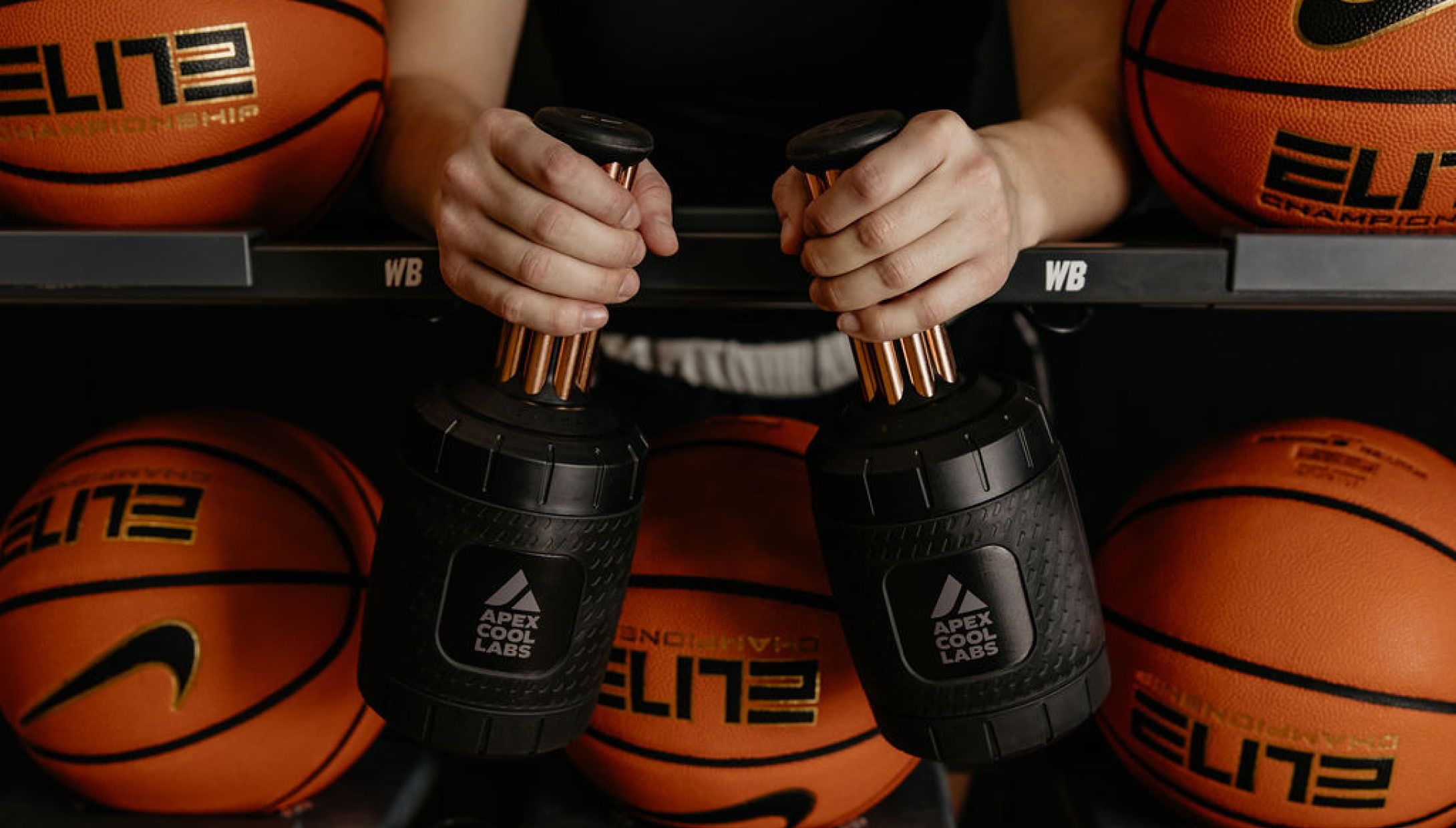
We talk a lot about palm cooling in the heat: summer two-a-days, firefighters on the line, pitchers in July. But now that it's basketball, hockey, and volleyball season, a fair question comes up. Why do indoor athletes palm cool when the gym is 68°F and the rink is colder than that? If you've noticed basketball players holding "hand coolers" on the bench, this is why.
The short answer: the heat that slows athletes down doesn't only come from the weather. It also comes from their own working muscles. Indoor athletes build that heat shift after shift and quarter after quarter, which leads to fatigue late in games.
Palm cooling gives the body a faster way to offload heat between efforts. Research done in room-temperature labs shows athletes who palm cool hold their power longer and show fewer signs of fatigue.
Here's what the science says.
Where the Heat Comes From
Heat is a byproduct of energy production. When our muscles work, only a fraction of the energy they burn becomes movement. In a classic study of muscular efficiency, Gaesser & Brooks (1975) found that people pedaling a stationary bike converted roughly 10–25% of their energy into work, depending on how efficiency is calculated. The rest, more than three-quarters, is released as heat.
The harder we work, the more heat we make. And that is true whether the game is played in a hot field house or on a sheet of ice. Room temperature affects how easily the body can get rid of heat, but the heat itself comes from the effort.
That heat adds up over a game. In Pliauga et al. (2015), published in the Journal of Human Kinetics, 10 college basketball players played a simulated game while researchers tracked their core body temperature. It rose during the warm-up and kept climbing throughout the game, reaching 39.4°C (about 103°F) by the end of the fourth quarter.
When core temperature climbs, the body responds the same way it does in a heat wave. Heart rate rises, more blood is sent to the skin to shed heat, and less is left for working muscles, which is why fatigue sets in.
When Sweat Can't Keep Up
Sweat is the body's most powerful cooling method, but it only works when it can evaporate. Some indoor athletes face bigger challenges than others.
- Hockey players wear heavy pads and layers that trap heat against the body and keep sweat from evaporating. A cold rink doesn't help much when the heat is held in under the gear.
- Athletes with spinal cord injuries often have a reduced ability to sweat and to send blood to the skin below the level of injury. A review in Sports Medicine (Griggs et al., 2015) notes that cooling strategies may be highly beneficial for these athletes "even in moderate ambient conditions (~21°C)."
Can Palm Cooling Help Athletes Sustain Power Late in the Game?
For indoor athletes, the payoff of palm cooling isn't only staying fresher longer. It's keeping up their power, speed, and force shift after shift, as heat builds over repeated efforts. Two studies done in room-temperature labs stand out.
Wydotis et al. (2026), Isokinetics and Exercise Science. Forty-five active adults, including nine varsity athletes, did three 20-second all-out cycling sprints with 2 minutes of recovery between them in a 75°F (24°C) lab. In one session they wore gloves holding cool gel packs from the warm-up through the final sprint; in the other, the same gloves with no packs. Power dropped with every sprint in both sessions. On the first sprint, there was no difference. On the later sprints, they kept up to 5.6% more peak power with palm cooling. The authors concluded palm cooling "becomes a more ergogenic treatment as body heat accrues."
O'Brien et al. (2021), Journal of Strength and Conditioning Research. Thirty-four moderately fit adults completed a hard, multi-stage rowing workout in a 70–73°F (21–23°C) lab, with and without gel-pack cooling gloves. With palm cooling, they rowed farther and had lower blood lactate, a common marker of fatigue. More of them finished all eight stages, too: 17 with palm cooling vs. 13 without.
The same pattern holds when the gym is hot. A 2026 study in Temperature (Hu et al.) simulated two halves of intermittent sprinting with a 15-minute half-time. Without cooling, peak power fell 11.2% from the first half to the second. With palm cooling before the game and at half-time, it fell just 1.8%.
Staying Sharp When It Matters
Athletes across sports tell us palm cooling helps them stay locked in late in games. The research offers a clue why: in the Hu study, athletes who palm cooled felt cooler and rated their effort lower, even though their core temperature was similar. How hot and hard a game feels shapes how hard athletes are willing to push.
Kindyll Wetta, former point guard for CU Women's Basketball, put it this way:
"The Narwhals have been crucial in helping me maintain the focus and intensity required to excel on the defensive end, especially in those high-pressure moments late in the game."
For coaches, it's also about the long haul of a season. Paul Valukas, a D1 Strength & Conditioning Coach, has made palm cooling part of every game:
"Our athletes love the Narwhals as they allow them to recover faster in competition and prepare for our long season. We have used them every game for the last two seasons and will continue to do so."
Why the Palms?
Palm cooling uses the body's natural radiators to remove heat. Our palms, cheeks, and soles of the feet contain vasculature called arterio-venous anastomoses (AVAs), which are responsible for full body temperature control. These special vessels are direct connections between arteries and veins. When we get hot, these areas can experience significantly more blood flow compared to other skin areas.
It is not as simple as holding ice. Temperatures below about 50°F cause vasoconstriction, which closes off those vessels and traps heat inside. That's why not every "hand cooler" works. Effective palm cooling requires the 3 Cs:
- Cool-not-Cold: Hold something that is 50–60°F (10–15°C).
- Conductivity: Use a material that transfers heat away from the hand quickly.
- Continuous heat removal: Keep the surface from warming up as it absorbs heat.
Built for the Bench
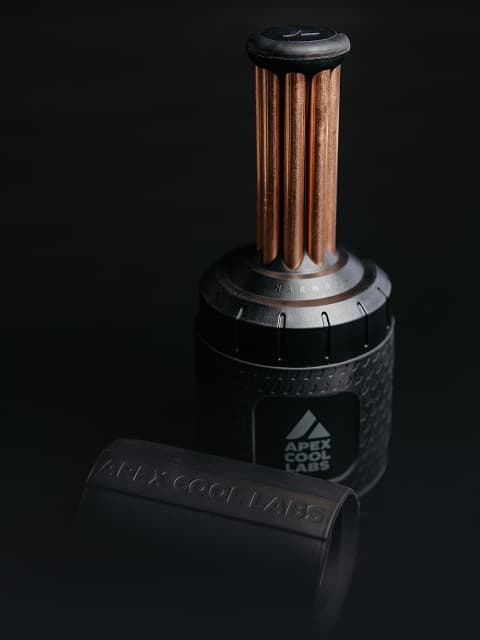
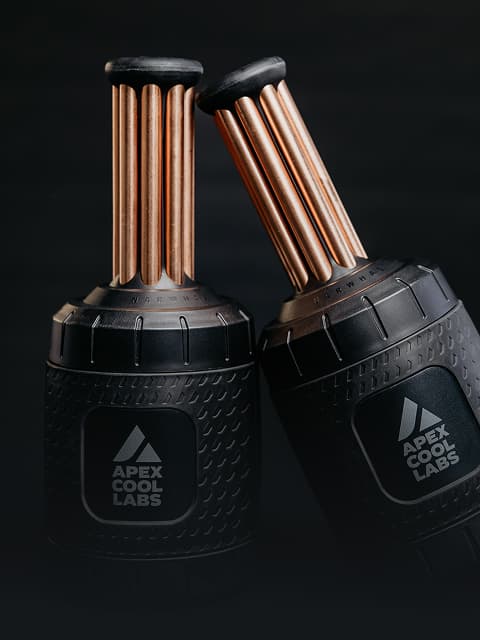
We designed the Narwhals to bring Cool-not-Cold palm cooling courtside, rinkside, and into the weight room. They stay within 50–60°F (10–15°C) for 2+ hours, have no moving parts, and have nothing to charge. The "tusks" are made of heat pipes, which have 100X the thermal conductivity of copper, and constantly whisk heat away.
How Indoor Athletes Use Palm Cooling
- Timeouts (1–3 minutes): Helps bring heart rate down and sustain intensity.
- Between shifts and sets (90 seconds–3 minutes): Cooling your hands between sets or shifts helps athletes start the next effort cooler.
- Halftime or intermission (5–10 minutes): Further lowers the heat load before the second half or next period.
- Post-game down regulation (about 5 minutes): Pair with breathwork to help the body settle after competition.
For more timing guidance, see 3 Common Palm Cooling Use Cases & Protocols. Palm cooling is one tool for managing heat. It works alongside hydration, fuel, rest, and good recovery habits.
The Cooler Athlete Is the Stronger Athlete
It doesn't have to be hot outside for heat to hold an athlete back. Working muscles produce heat that builds with every shift, set, and quarter. Palm cooling gives indoor athletes a simple way to offload some of that heat between efforts, so they can sustain their power and stay sharp throughout the game. Because the research is clear: a cooler athlete performs better!
References
- Gaesser, G. A., & Brooks, G. A. (1975). Muscular efficiency during steady-rate exercise: Effects of speed and work rate. Journal of Applied Physiology, 38(6), 1132–1139. https://doi.org/10.1152/jappl.1975.38.6.1132
- Pliauga, V., et al. (2015). The effect of a simulated basketball game on players' sprint and jump performance, temperature and muscle damage. Journal of Human Kinetics, 46, 167–175. https://pmc.ncbi.nlm.nih.gov/articles/PMC4519207/
- Griggs, K. E., Price, M. J., & Goosey-Tolfrey, V. L. (2015). Cooling athletes with a spinal cord injury. Sports Medicine, 45(1), 9–21. https://doi.org/10.1007/s40279-014-0241-3
- Wydotis, M., et al. (2026). The influence of palm cooling on high-intensity interval training. Isokinetics and Exercise Science. https://doi.org/10.1177/09593020261419923
- O'Brien, I. T., et al. (2021). Use of gloves to examine intermittent palm cooling's impact on rowing ergometry. Journal of Strength and Conditioning Research, 35(4), 931–940. https://doi.org/10.1519/JSC.0000000000003561
- Hu, X., Aihara, K., & Hasegawa, H. (2026). Pre-exercise and inter-bout palm cooling enhances intermittent sprint performance despite no thermoregulatory advantage during exercise in the heat. Temperature. https://doi.org/10.1080/23328940.2026.2728900