Does Palm Cooling Help Pitchers? What 3 Studies Say About Arm Fatigue & Mechanics

Baseball is a game of margins. An inch at the plate. A degree of shoulder rotation. An extra mile per hour in the seventh inning when fatigue has accumulated and mechanics start to break down. For athletic trainers, finding evidence-based recovery strategies that can be applied during a game is essential.
Palm cooling is one of those strategies and a growing body of research shows that palm cooling between innings can help pitchers maintain shoulder strength and preserve pitching mechanics late in games when it matters most.
Why the Palm?
The palms, along with the soles of the feet and the cheeks, contain specialized vasculature called arterio-venous anastomoses (AVAs). These AVAs act as the body's primary radiators: when we exert effort and generate heat, blood flow to the palms can increase up to 10 times compared to other skin regions. By cooling the palm, we cool the blood that circulates through the entire body — offloading heat, reducing metabolite accumulation in working muscles, and supporting continued force production. The effect is systemic. Cooling the palm benefits the shoulder even though the shoulder is not being cooled directly!
What the Research Shows
Three studies make a compelling case for palm cooling in baseball. Two come from Japan, where this area of research has been particularly active, and one from Taiwan, published in 2025. Together they address shoulder function, pitching mechanics, and throwing velocity. We should note these first two studies showed positive results using an icing technique, despite icing being suboptimal (more on that in a moment).
Study 1: Palm Icing Preserves Shoulder Strength and Avoids the Risks of Direct Shoulder Icing
Miyashita et al., 2021 — Journal of the Japanese Athletic Trainers' Organization
This foundational study compared three recovery approaches in 48 male college students after shoulder external rotation exercise taken to failure: no icing (control), direct shoulder icing, and palm icing. Outcomes were measured immediately post-exercise and again 24 hours later.
The palm cooling group preserved external rotation strength significantly better than both the control and shoulder icing groups immediately after exercise, and showed no meaningful decline the following day. The shoulder icing group, by contrast, produced a significant reduction in internal rotation (IR) range of motion (ROM) that persisted to the next day consistent with clinical reports from pitchers who describe shoulder stiffness after direct icing and difficulty pitching in consecutive games.
Palm icing produced no IR ROM restriction. For athletic trainers managing pitchers on short rest, this is a meaningful distinction. Direct shoulder icing may help strength recovery but comes with a mobility cost that palm cooling avoids.
Study 2: Palm Icing Maintains Mechanics Late in a Simulated Game
Miyashita et al., 2022 — Journal of the Japanese Athletic Trainers' Organization
This study moved the question into a game-simulated context. Eight male college students with competitive baseball backgrounds performed 9 sets of maximal isometric shoulder abduction efforts with 5-minute rest between sets designed to mirror the demands of 9 innings. In the palm cooling condition, the non-throwing hand was cooled with an ice bag during each rest period.
Without cooling, shoulder abduction strength declined significantly in the later sets, and all 8 subjects showed a measurable decrease in shoulder abduction angle during shadow pitching after the protocol (the "elbow drop" pattern is associated with increased injury risk as mechanics deteriorate under fatigue).
With palm icing between sets, strength decline was suppressed across all 9 sets with no significant drop. Only 3 of 8 subjects showed a significant reduction in shoulder abduction angle.
One additional finding worth noting: supraspinatus deep tissue temperature continued to rise through the protocol in the cooling condition, suggesting that palm cooling does not impair working muscle thermodynamics. The authors propose this supports a fatigue metabolite suppression mechanism rather than simple muscle cooling. In other words, the muscle stays warm and functional while the systemic fatigue response is blunted.
A Note on Icing Versus Cooling
In the first two studies, the researchers had participants place their palm on a bag of ice. Based on a growing body of research, the ideal temperature range for palm cooling is 50-60°F. Below 50°F, most people will vasoconstrict and lose the blood flow in the palm that is essential for this technique to work. Above 60°F, you reduce the heat flow from the palm. There is some evidence that you can use colder palm cooling temperature if the person is working intensely and is quite hot. However, the sweet spot for this technique is 50-60°F. We anticipate, based on the body of research, the findings of the studies above would be even more pronounced with optimized palm cooling parameters. The following study offers strong support to this hypothesis.
Study 3: Throwing Velocity and Accuracy Improve When Participants are Comfortable with Cooling
Lin, Huang & Cai, 2025 — Journal of Human Kinetics
In this Taiwanese study, twenty-two university division II baseball players performed 5 sets of 10 maximal fastball throws at regulation pitcher's mound distance (18.75m), with 3-minute inter-set recovery using either bilateral hand immersion in 10°C (50°F) water for 2.5 minutes or no cooling, in a randomized crossover design.
Before interpreting the results, a note on the method. This study used hand immersion, which is a more aggressive cooling stimulus than holding a palm cooling device. In this case, water makes contact with the entire hand, compared to a device only held against the palm. The high heat capacity of water, coupled with the thinner skin found on the back of our hands, likely explains why some participants felt significant discomfort when submerging their entire hand in water. This discomfort should not occur for the vast majority of users with a properly tuned palm cooling device.
After submerging their hands in cool water, participants reported their pain response using a 4-point verbal rating scale. Ten participants reported no pain; twelve reported mild-to-moderate pain.
Results diverged sharply between groups. In the no-pain group, palm cooling produced significantly higher mean throwing velocity, higher maximal throwing velocity, and better throwing accuracy compared to no cooling. Arousal levels, measured via the Felt Arousal Scale, were also significantly elevated and the authors tie this to enhanced motor cortex excitability and increased motor unit recruitment as the likely mechanism behind the performance gains.
In the pain group, palm cooling produced the opposite: significantly lower mean and maximal throwing velocity compared to no cooling, with no accuracy benefit. Notably, RPE was reduced in both groups — meaning perceived effort went down even when performance went down. The authors noted that reduced RPE is not a reliable proxy for ergogenic benefit when cooling-induced pain is present.
This study strongly suggests that properly implemented palm cooling that avoids discomfort while still conferring optimal cooling should result in critical maintenance of pitching performance late in games.
The Protocol: Follow the 3 Cs
The takeaway is that method and temperature matter enormously. A device designed to operate in the 50-60°F (10-15°C) aka Cool-not-Cold range, with palm-only contact rather than full hand immersion has shown significant performance benefits in a growing body of research, without reported discomfort.
To maximize the benefit and avoid vasoconstriction, follow the 3 Cs of palm cooling:
- Cool-not-Cold. The target temperature is 50-60°F (10-15°C). Below 50°F, most people will vasoconstrict, cutting off the heat exchange pathway, as well as experiencing discomfort.
- Good Conductivity. The device should have high thermal conductivity to maximize heat transfer from your palm to device.
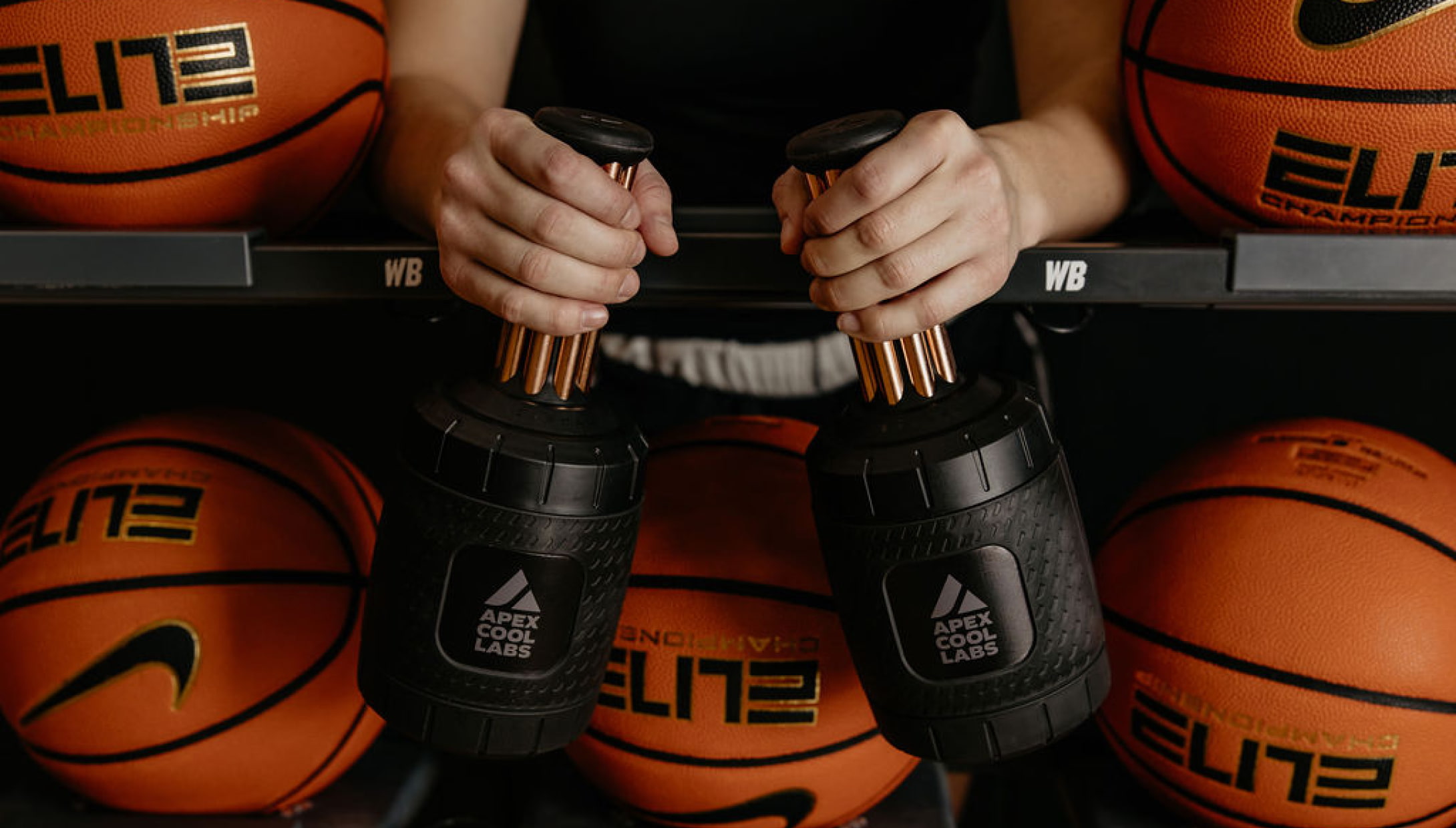
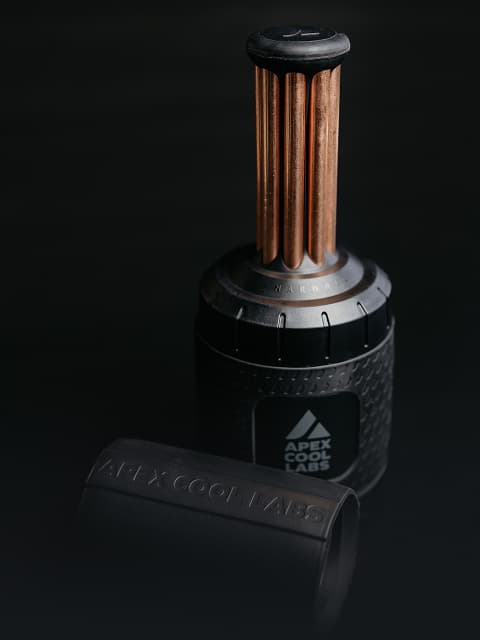
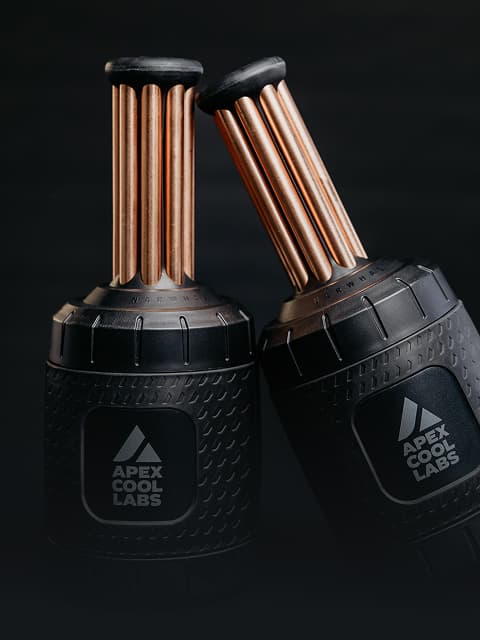
- Continuous Heat Removal. A mechanism for ongoing heat removal such as heat pipes (which is what we use in the Narwhals) prevents a thermal barrier from forming between your palm and the cooling surface.
For baseball specifically, 3 to 5 minutes between innings is the target window. Both two hand and one hand cooling are effective.
Takeaways for Athletic Trainers in Baseball
Taken together, these three studies indicated that palm cooling, under the right conditions, can be used between innings to significantly enhance pitching performance in the moment.
The research is still developing, and more studies with controlled devices are needed. But the mechanistic rationale is sound, the early evidence is consistent, and the risk profile is low. For athletic trainers looking for an evidence-informed, low-barrier strategy to support pitchers deeper into games and across a long season, palm cooling is worth adding to the toolkit.
References
- Miyashita, K. et al. (2021). Effect of icing on the palm after shoulder external rotation on shoulder external rotation muscle strength and internal rotation range of motion. Journal of the Japanese Athletic Trainers' Organization, 7(1), 33–39.
- Miyashita, K. et al. (2022). Basic research on the effect of icing on the palm for the purpose of preventing pitching injuries: 2nd report. Journal of the Japanese Athletic Trainers' Organization, 8(1), 57–64.
- Lin, K.H., Huang, Y.M., & Cai, Z.Y. (2025). The ergogenic effects of intermittent palm cooling on repeated baseball throwing are reversed when cooling-induced pain occurs. Journal of Human Kinetics, 98, 67–77.