Can Palm Cooling Reduce Late-Game Power Loss? What a New Study Shows

Games are often won late. The team that still has its speed and power in the final minutes usually comes out ahead. But by the second half, fatigue is creeping in, and in the heat, that fade hits harder. What if there was an in-game recovery option that could blunt this loss of power?
A new study from Hiroshima University suggests palm cooling at breaks can do exactly that. In a game-like test in 90°F (32°C) heat, athletes who cooled their palms before the start and at half-time lost about 2% of their peak sprint power in the second half. Without cooling, they lost 11% [1].
Key Takeaways
- Palm cooling after warming up and at half-time limited the second-half drop in peak sprint power to about 2%, compared with 11% without cooling.
- All 9 athletes produced more second-half sprint power when their palms were cooled.
- Core body temperature, heart rate and sweat loss were the same with and without palm cooling in this study.
- The researchers credit the benefit mainly to perception: cooled athletes felt cooler, rated the work as easier and felt more recovered. They also proposed a possible nervous system mechanism.
- The study used small cooling packs that warmed up fast, which may explain why core body temperature did not change.
How Was the Study Set Up?
The researchers built a cycling protocol designed to mimic a game, with two halves and a half-time break, all in a hot room. Nine physically active men each completed two sessions in random order: one with palm cooling and one without. The room was held at 90°F (32°C) and 60% humidity.
Each session followed the same structure:
- Warm-up: 5 minutes of easy cycling, then 15 minutes of seated rest.
- First half: 30 minutes of steady cycling, then 10 all-out 5-second sprints, each followed by easy pedaling and rest.
- Half-time: 15 minutes of seated rest.
- Second half: the same as the first.
In the cooling session, athletes held a 54°F (12°C) cooling pack in each palm during the 15-minute rest after the warm-up and again during half-time. In the other session, they rested without cooling.
What Did the Researchers Find?
With palm cooling, athletes held their sprint power in the second half. Without it, their power faded. The difference was statistically significant for both peak power (the highest instant of each sprint) and mean power (the average across each 5-second sprint).
Drop in sprint power, first half to second half:
- Peak power: down 11% without cooling vs. down 2% with palm cooling
- Mean power: down 8.5% without cooling vs. down 0.7% with palm cooling
In the second half, peak power was 15.5% higher with palm cooling than without it.
The result held for every athlete, not just on average. In the first half, individual results were mixed. In the second half, all 9 athletes produced more power with palm cooling.
The surprise was what didn't change. Core body temperature rose about 3.6°F (2°C) over the session in both conditions. Heart rate, skin temperature, sweat loss and hydration were also the same with and without cooling.
Why Did Power Hold Up If Core Temperature Didn't Drop?
The researchers' main explanation is perception. Throughout the session, cooled athletes felt cooler and more comfortable, rated the work as easier, and reported feeling more recovered at half-time.
Those feelings lasted even after palm skin temperature had warmed back up. The researchers suggest the brain carries the earlier cooling signal forward, so athletes kept feeling the benefit even after the packs had warmed up.
The researchers also raise a second possibility: cooling may change how hard the nervous system lets muscles work. When we exercise in the heat, the brain limits effort as it senses heat stress building, often well before core body temperature reaches a dangerous level. Cooling signals from the palms may ease that limit. The study did not measure nervous system activity, so this remains an open question.
Other research supports the idea that cooling signals can boost performance without changing body temperature. In one study, a menthol mouth rinse improved 30 km cycling time-trial performance in the heat by 2.3%, with no change in core body temperature [2].
Why Wasn't Core Temperature Lower?
The most likely reason is that the cooling packs ran out of cooling power too quickly. Palm cooling can lower core body temperature, when heat removal is sustained, which means keeping a thermal barrier from forming between the palm and the cooling source.
Our palms, cheeks and the soles of our feet contain vessels called arterio-venous anastomoses (AVAs), which play a major role in body temperature control. These vessels are direct connections between arteries and veins. When we get hot, these areas can carry up to 10X the blood flow of other skin, which makes them natural radiators for shedding heat.
In this study, each hand held one small pack, about 2.5 × 4 inches. Palm skin temperature dropped by about 8°F (4.5°C) at the start of half-time, then warmed back up within minutes while athletes were still holding the packs. That rebound is a sign the packs were losing their ability to pull heat away [1].
Studies that did lower core body temperature kept the cooling going. In one study, cold packs on the palms, soles and cheeks were replaced every 9 minutes, and core temperature fell more than twice as fast as with no treatment [3]. In another study, athletes immersed their hands and forearms in cool water at half-time, and core temperature dropped about 1°F (0.54°C) in 15 minutes [4].
Our take: as a static pack warms, heat transfer from the palm drops sharply. Cooling that removes heat continuously avoids that problem.
What Does This Mean for Coaches?
Palm cooling at natural breaks is a simple way to help athletes sustain their output late in a game.
The temperature matters. Holding ice causes vasoconstriction, which narrows the blood vessels in the palm and shuts down the heat exchange. Research points to 50–60°F (10–15°C) as the effective "cool, not cold" range.
What are common palm cooling protocols for athletes?
- Pre-cooling after warm-up: 5–10 minutes
- Time-outs and short breaks: 1–3 minutes
- Half-time: 5–10 minutes
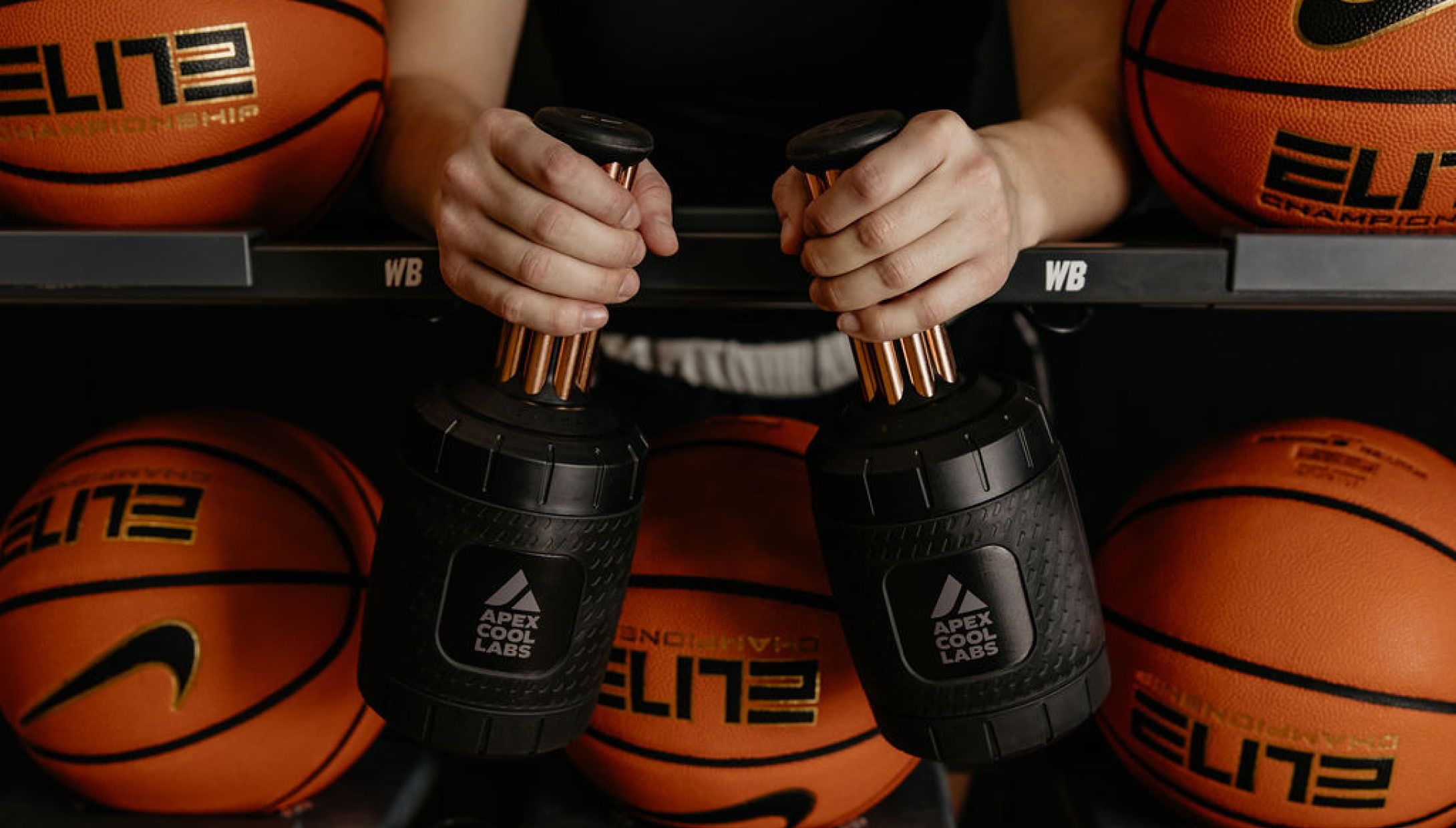
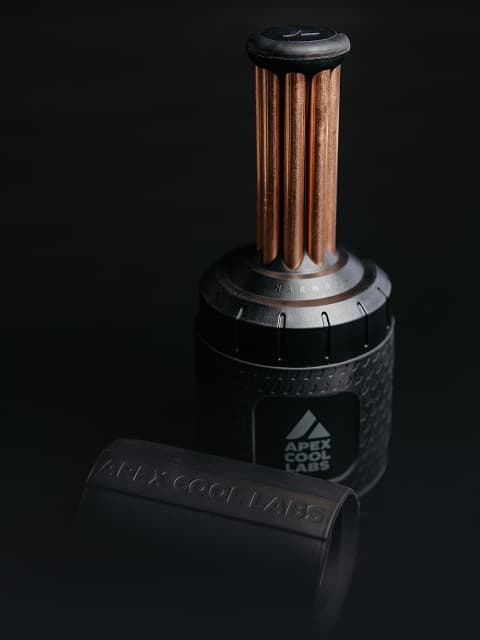
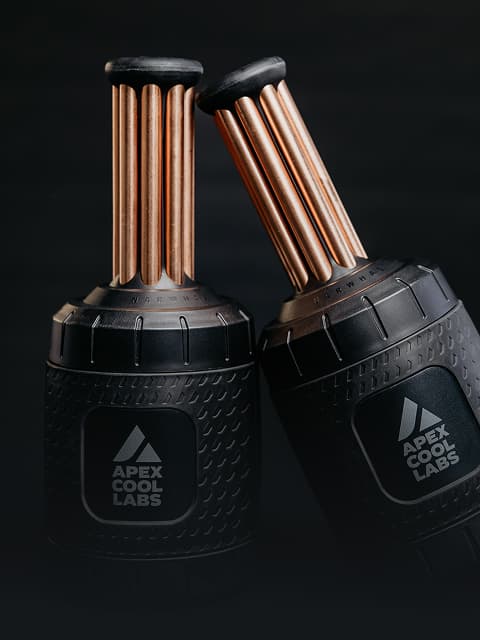
We designed the Narwhals for exactly this kind of use. They start around 50°F (10°C) and stay in the ideal temperature range for about 2 hours, so the cooling keeps going through a full game.
What Would We Like to See Next?
It is encouraging to see sports-specific palm cooling research emerge as there are so many interesting questions to explore! We hope future studies look at additional parameters such as:
- Continuous cooling. The same protocol with cooling that lasts the entire break.
- Faster core temperature readings. Esophageal temperature responds to change faster than rectal temperature, which this study used.
- Shorter breaks. A protocol built around time-outs or shifts, where athletes may only get 2–3 minutes.
Frequently Asked Questions
Does palm cooling improve sprint performance?
In a 2026 study from Hiroshima University, palm cooling before exercise and at half-time limited the second-half drop in peak sprint power to about 2%, compared with 11% without cooling [1]. Two 2025 studies also found palm cooling helped athletes sustain repeated sprints [5, 6].
Does palm cooling need to lower core body temperature to work?
Not necessarily. In the Hiroshima study, sprint power held up even though core body temperature was the same with and without cooling. The researchers credit the benefit mainly to athletes feeling cooler and less strained.
When should athletes use palm cooling during a game?
Athletes can cool their palms after the warm-up, during time-outs and at half-time. Short sessions of 1–3 minutes fit time-outs, and 5–10 minutes fits half-time.
What temperature should a palm cooling device be?
Research points to 50–60°F (10–15°C). Colder objects, like ice, can cause vasoconstriction, which reduces blood flow to the palm and limits heat exchange.
References
- Hu, X., Aihara, K., & Hasegawa, H. (2026). Pre-exercise and inter-bout palm cooling enhances intermittent sprint performance despite no thermoregulatory advantage during exercise in the heat. Temperature. https://doi.org/10.1080/23328940.2026.2728900
- Gavel, E. H., Logan-Sprenger, H. M., Good, J., Jacobs, I., & Thomas, S. G. (2021). Menthol mouth rinsing and cycling performance in females under heat stress. International Journal of Sports Physiology and Performance, 16(7), 1014–1020. https://doi.org/10.1123/ijspp.2020-0414
- Lissoway, J. B., Lipman, G. S., Grahn, D. A., et al. (2015). Novel application of chemical cold packs for treatment of exercise-induced hyperthermia: a randomized controlled trial. Wilderness & Environmental Medicine, 26(2), 173–179. https://doi.org/10.1016/j.wem.2014.11.006
- Iwahashi, M., Chaen, Y., Yanaoka, T., Kurokawa, Y., & Hasegawa, H. (2023). Cold water immersion of the hand and forearm during half-time improves intermittent exercise performance in the heat. Frontiers in Physiology, 14, 1143447. https://doi.org/10.3389/fphys.2023.1143447
- Brown, M., Daniels, J., Crabtree, M., et al. (2025). The effects of palmar cooling on repeated sprinting ability: a randomized controlled clinical trial. Sensors, 25(6), 1830. https://doi.org/10.3390/s25061830
- Wrabley, E. R., Lagerquist, B. L., Smith, G. A., et al. (2025). The effects of palm cooling on repeat sprint ability following a fatigue-inducing protocol in collegiate female athletes. International Journal of Exercise Science, 18(3), 415–426. https://doi.org/10.70252/KSSI2281